Epiphone rebuilds the Prophecy Series around its first Victory and a 27-inch Les Paul Baritone
Five modernized electrics pair compound-radius ebony boards and stainless frets with custom triple-voice Fishman Fluence pickups.
· Edited by Peter Luha
Credit: Epiphone (via source)
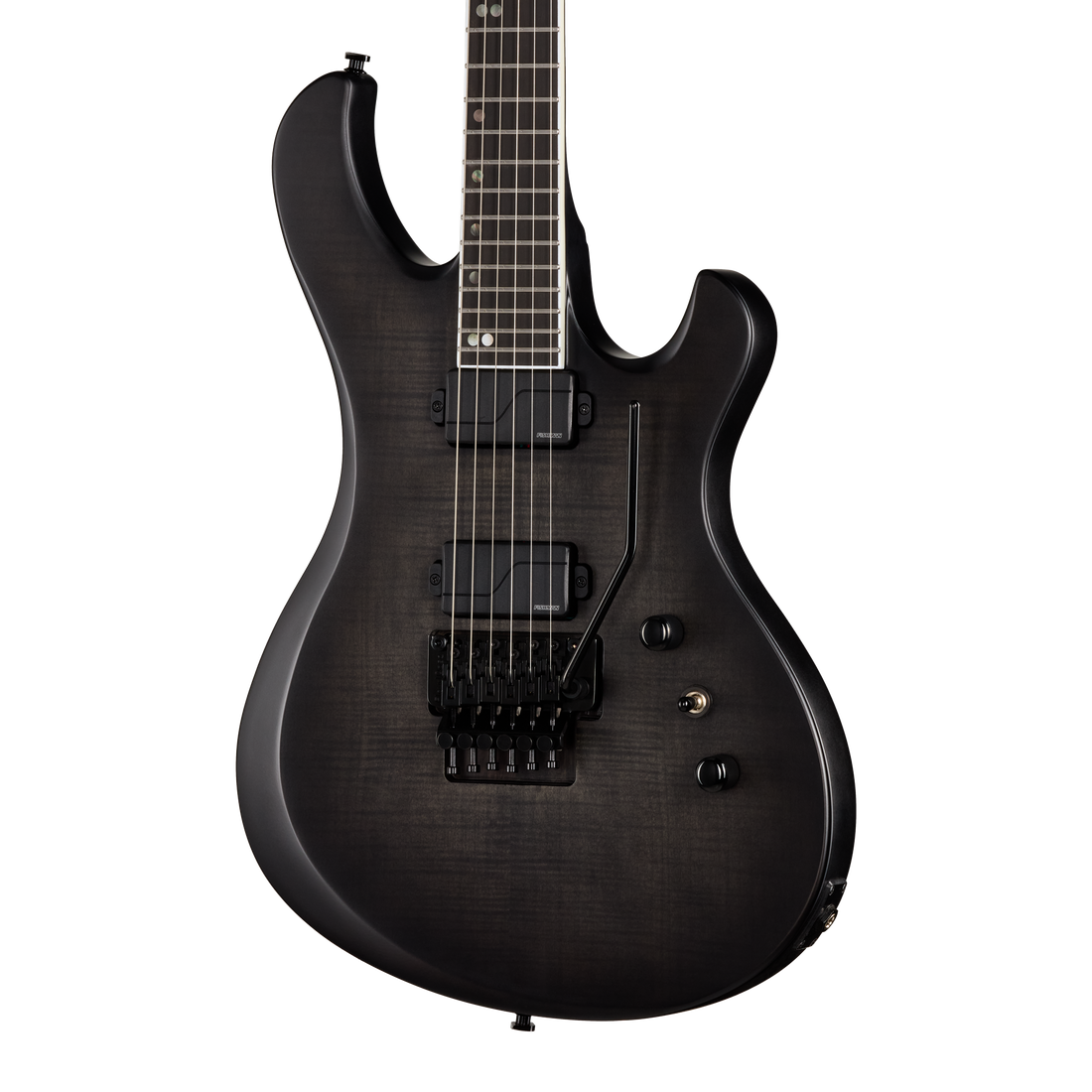
Epiphone’s rebuilt Prophecy Series expands the company’s modern-metal line to five instruments: the Prophecy Victory FR, Les Paul Baritone, Les Paul, SG and Flying V. The two headline additions are also firsts for the brand: the Victory FR is Epiphone’s first production take on the Victory body shape, while the 27-inch-scale Les Paul Baritone revives a format the company has not offered for more than two decades.
Across the range, Epiphone has moved to thermally aged one-piece maple necks reinforced with graphite and shaped to a new Hyperglide profile. Bound ebony fingerboards use a 10-to-14-inch compound radius and 24 stainless-steel frets. Custom Fishman Fluence humbuckers provide three voices per pickup, selected through push-pull controls, while locking Grover tuners and Epiphone’s Direct-Attachment Pickup System complete the shared specification.
The Prophecy Victory FR uses a 25.5-inch scale, a mahogany body with a figured maple veneer and a Floyd Rose 1000-series tremolo with an R3 locking nut. The Les Paul Baritone stretches to 27 inches, ships with .012–.060 strings and is set up for B-to-B tuning. The conventional Les Paul, SG and Flying V retain familiar silhouettes while adopting the same neck, fret and pickup platform.
That common platform makes the range more than a finish refresh. Players can choose between fixed-bridge, baritone and double-locking-tremolo formats without giving up the same compound-radius neck, stainless frets or multi-voice electronics, positioning Prophecy as Epiphone’s most overtly performance-focused electric family.
Credit: YouTube
Why it matters
Epiphone is bringing baritone range, a first-ever Victory shape and unusually high-spec hardware into one coherent production family rather than treating them as isolated limited models.
From Guitar News to Guitar Progress
Discover it here. Learn how it works. Practice it until it's yours.
“Play 4 bars at 80 BPM, then immediately 4 bars at 120, then back. No slowing down in the transition.”
Related
Neural DSP gives Morgan Amps Suite X faster preset browsing and session-wide control locks
The free X update retains three Morgan amp models while adding Global Lock, tagged preset search, two skins and undo/redo.

Positive Grid retunes Spark CAB 2 for tighter lows and a cleaner path into modeler rigs
The 140-watt powered FRFR cabinet keeps the 10-inch-plus-tweeter format while adding revised acoustics, flexible power and independent stage and PA levels.

Ibanez and Dragon Ball Z team up on a Japan-made RG, TS808 and full instrument range
The early-2027 collaboration spans more than ten instruments and accessories, led by a collector-grade Goku and Gohan RG package.
Fender gives Kim Gordon a Jazzmaster with a JB humbucker and stripped-back controls
The limited Olympic White offset pairs a hot Seymour Duncan bridge pickup with a traditional Jazzmaster neck voice.