Crazy Tube Circuits extracts Triptychon’s drive section into the Rapture overdrive
The Athens-built pedal preserves the original circuit at its core, then adds interactive MORE and MOD switches for wider headroom and clipping options.
· Edited by Peter Luha
Credit: Crazy Tube Circuits (via source)
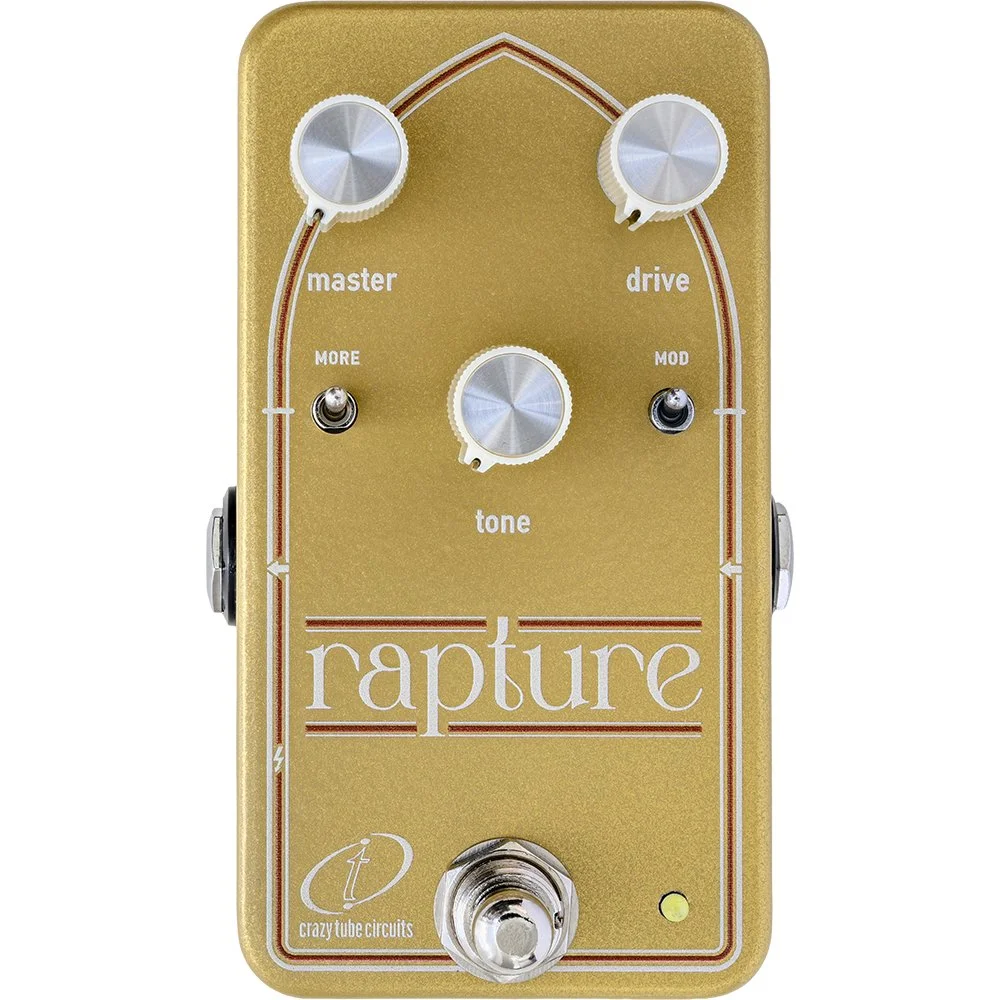
Crazy Tube Circuits Rapture turns the amplifier-style drive section from the company’s larger Triptychon pedal into a dedicated standalone overdrive. Announced on October 20 and now listed in stock, it is aimed at clean enhancement through low-to-mild breakup rather than high-gain distortion. With the two toggle switches down, the maker says the circuit reproduces Triptychon’s original drive voice.
The three main controls are Drive, Tone and Master. MORE expands the available gain and changes character according to the Drive setting and the position of MOD; MOD reduces clipping in its alternate position for a more open response and greater apparent headroom. Those controls are intended to vary compression, harmonic content and pick response without turning Rapture into a conventional two-channel pedal.
The Eden Gold enclosure measures 112 × 67 × 50 mm and weighs 250 g. Switching is relay-based true bypass, and power is 9–18 V DC, centre-negative, with no supply included. Crazy Tube Circuits designs and hand-builds the pedal in Athens, Greece. The company lists it at €189 and says orders ship in two to three days; Sonic State also reports a UK price of £165.
The useful distinction here is focus. Players who wanted only Triptychon’s foundation-drive section no longer need to buy the broader multi-effect design, while the MORE and MOD interaction gives that familiar circuit more room for gain stacking and different amplifier setups. It is a compact boutique launch, but a concrete response to repeated requests for a standalone version.
Credit: YouTube
Why it matters
Rapture makes a previously bundled drive circuit independently available and adds meaningful control over how it behaves with different rigs.
From Guitar News to Guitar Progress
Discover it here. Learn how it works. Practice it until it's yours.
“Play two independent melodic lines simultaneously — one in the bass, one on top. They must relate but not copy each other.”
Related

Luminite's Graviton beta adds two-way Kemper Link and a dedicated MIDI clock screen
Firmware 5.4.9 lets Graviton M1 and M2 controllers exchange names, navigation and tuner data with Kemper Profilers while expanding live clock control.
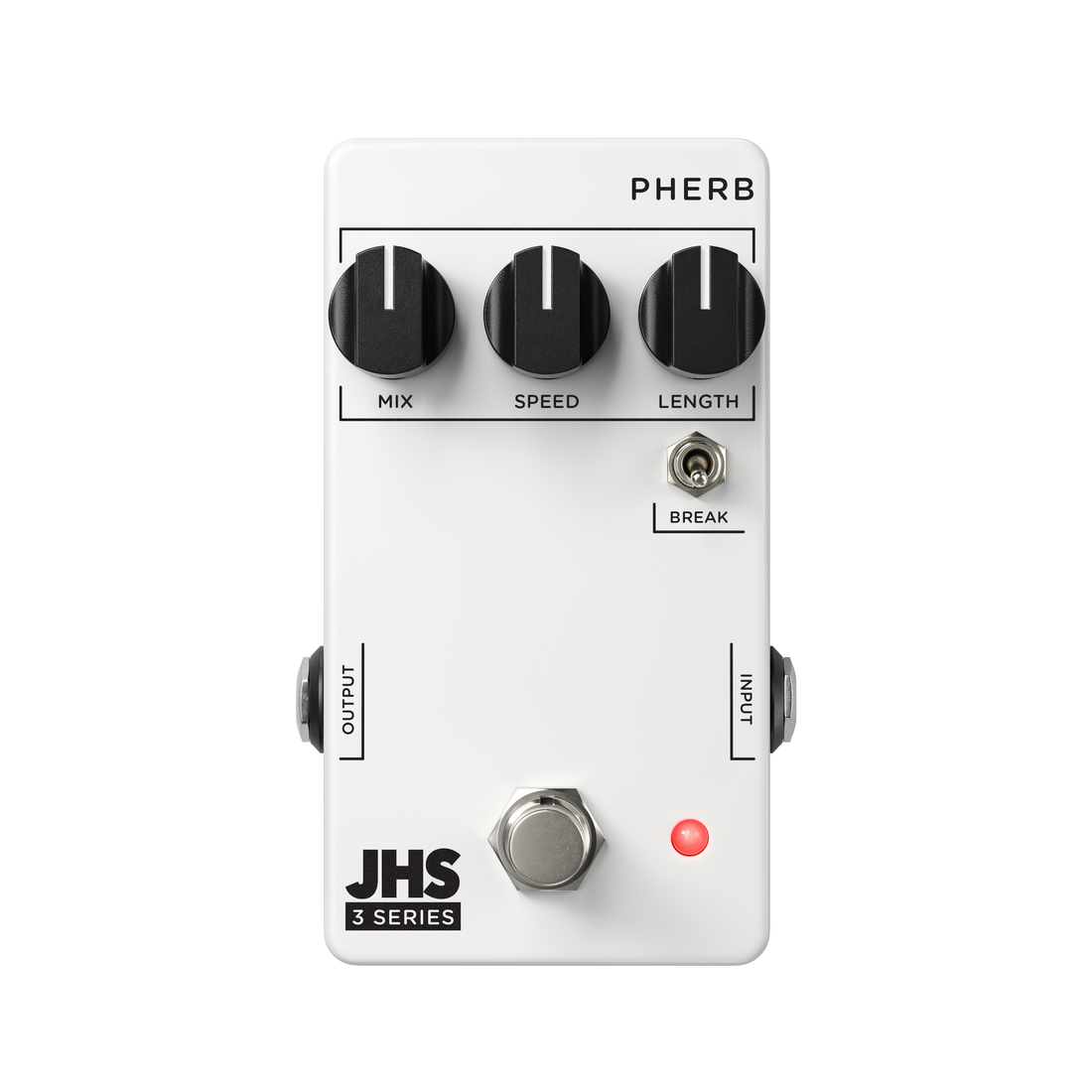
JHS turns an internet joke into the $99 3 Series PHERB
The compact pedal hardwires dark lo-fi reverb into a four-stage phaser, then adds a BREAK mode for bit-crushed, clipped textures.

Richie Kotzen teases a baby-blue Stratocaster for 2027
The one-off-looking build keeps his figured-top, gold-hardware formula but points to a slimmer neck and a possible new Fender chapter.
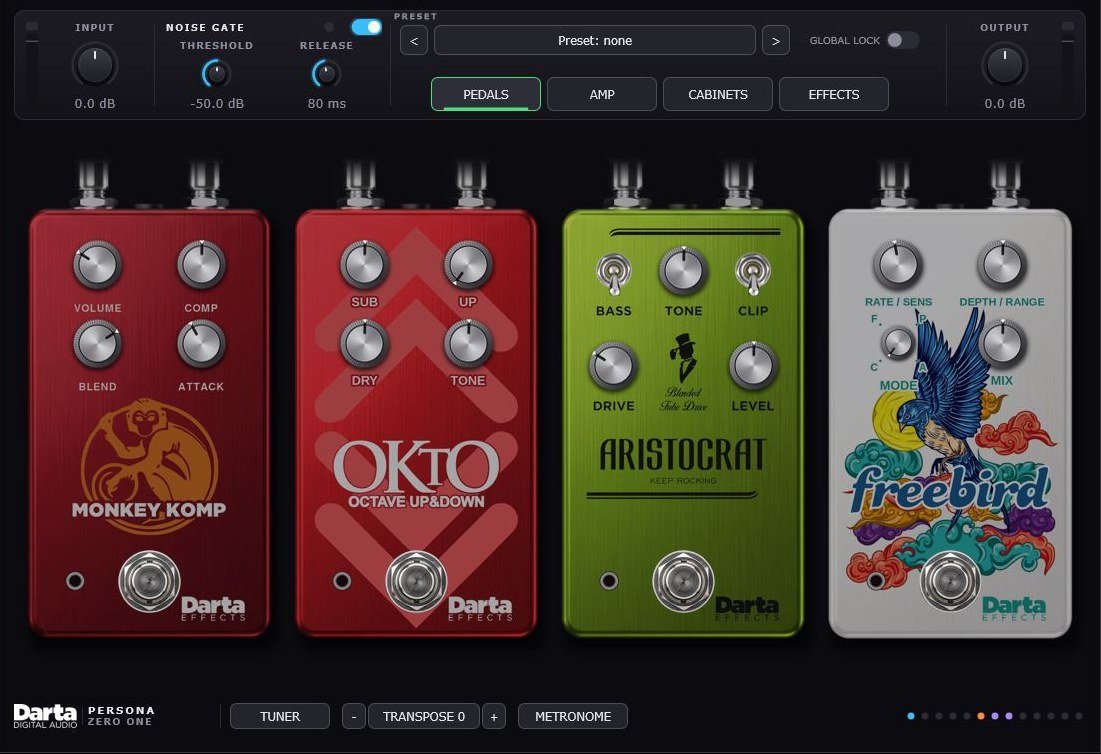
Darta Persona: Zero One combines a captured amp, four pedals and NAM support
The Brazilian plugin packs a complete guitar rig into VST3, AU and standalone formats at a R$249 launch price.