JHS turns an internet joke into the $99 3 Series PHERB
The compact pedal hardwires dark lo-fi reverb into a four-stage phaser, then adds a BREAK mode for bit-crushed, clipped textures.
· Edited by Peter Luha
Credit: JHS Pedals (via source)
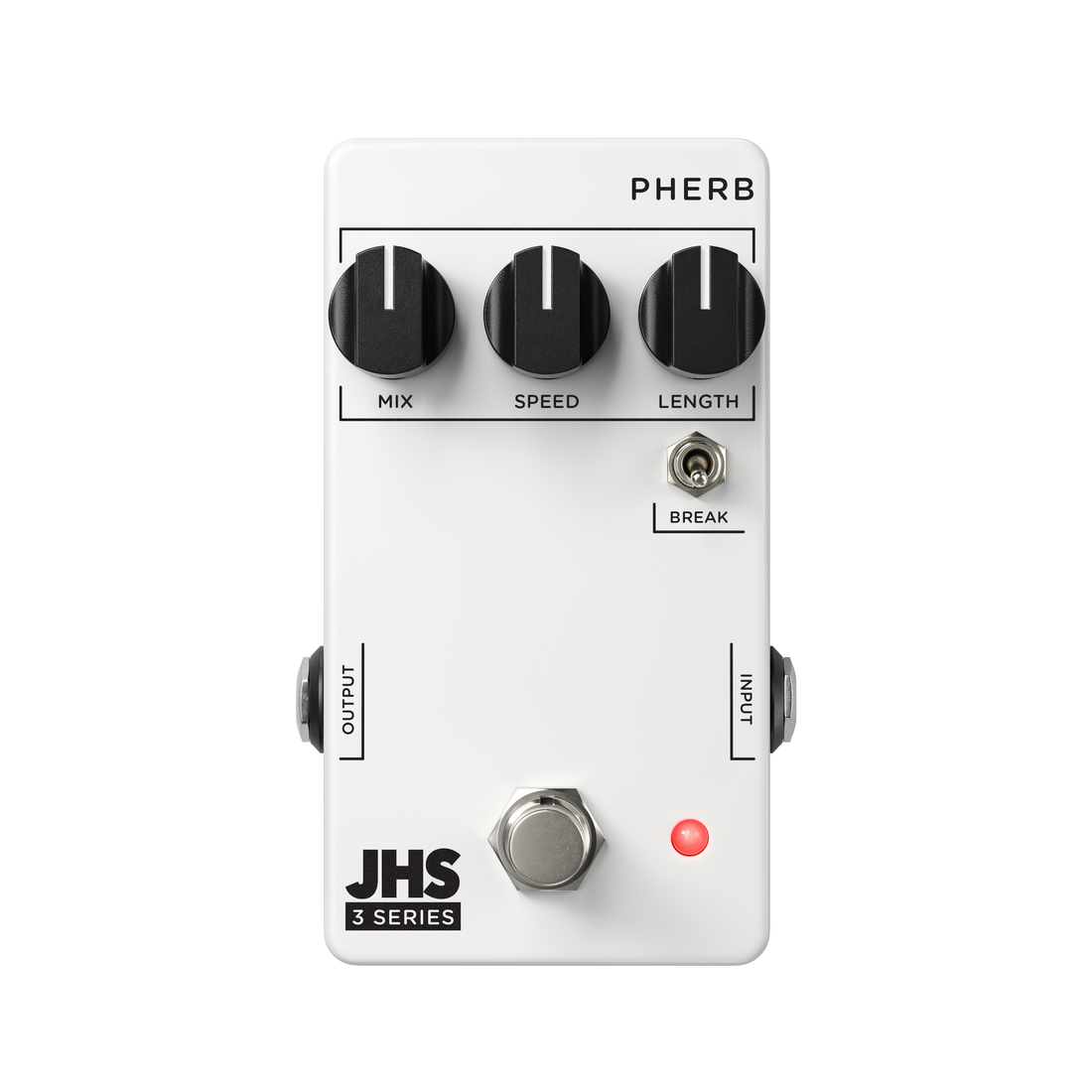
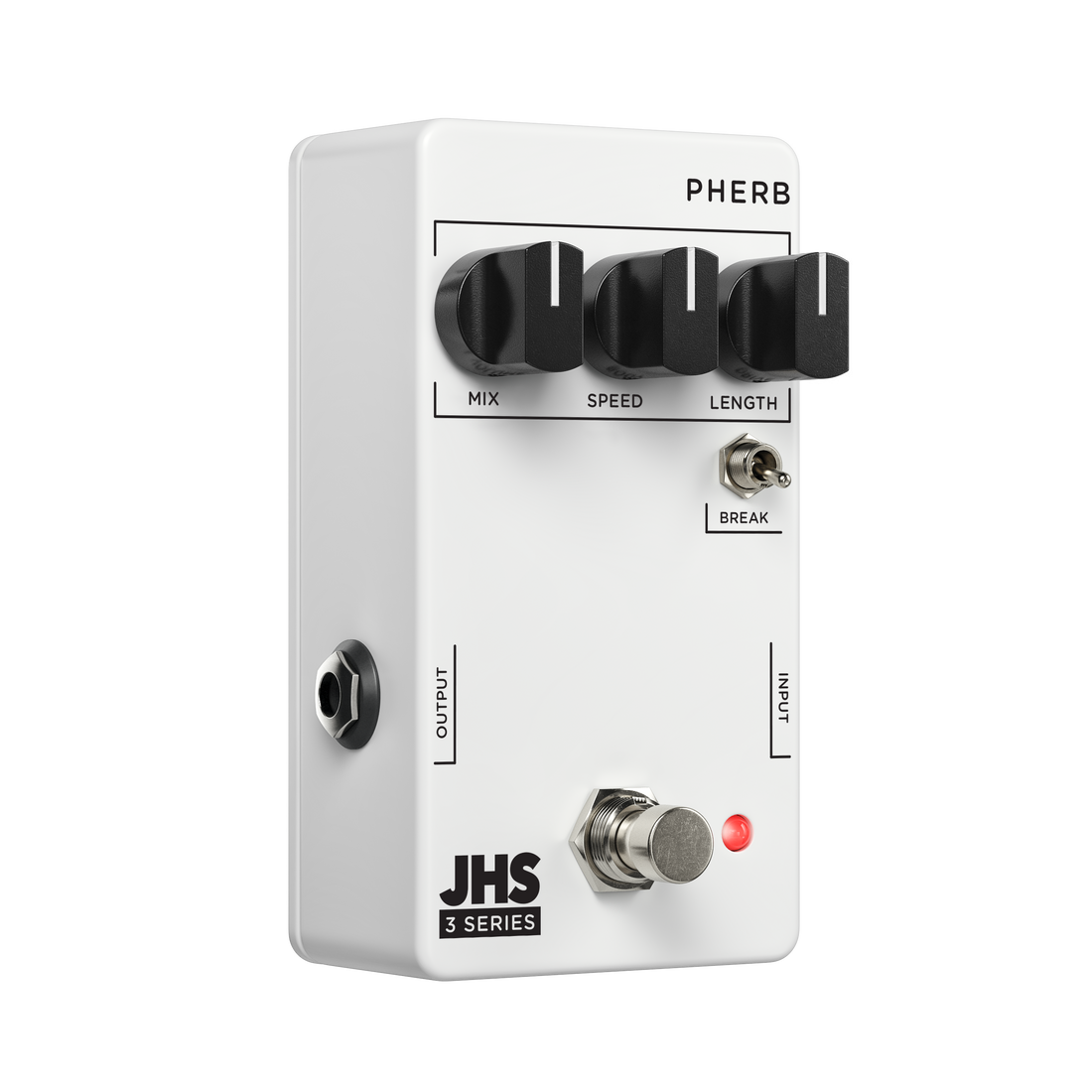
JHS Pedals has released the 3 Series PHERB, a deliberately unruly hybrid that routes a dark, lo-fi reverb into a four-stage phaser. Both effects remain active, so the three-knob layout is about shaping the interaction rather than choosing one side of the circuit. Mix sets the overall effect level, Speed sweeps the phaser from a near-static 0.05 Hz to 5 Hz, and Length stretches the reverb decay from 241 milliseconds to 49.83 seconds.
The BREAK toggle is the pedal's wildcard. Engaging it introduces bit-crushing and analog clipping, pushing the wash away from conventional ambience and toward fractured, videogame-like artifacts. JHS says the circuit was designed, prototyped and approved in 35 hours, a compressed development story that matches the pedal's origin as a community meme but does not reduce it to a novelty box.
At $99, PHERB sits inside the accessible 3 Series rather than JHS's more elaborate lines. It uses a standard 9V center-negative supply, draws 70 mA and occupies the familiar compact 3 Series enclosure. The official product page lists the pedal as available, with the same straightforward controls used across the range.
The interesting part is the signal order: reverb before phasing creates movement inside the reflections instead of simply sweeping the dry guitar. That should make PHERB useful for warped shoegaze beds, unstable ambient parts and short, percussive sounds that need more character than a conventional reverb-plus-modulation pairing.
Credit: JHS Pedals (via source)
Why it matters
PHERB packages an unusual fixed routing and extreme decay range into an inexpensive, immediately available pedal, turning a joke concept into a practical texture tool.
From Guitar News to Guitar Progress
Discover it here. Learn how it works. Practice it until it's yours.
“Play two independent melodic lines simultaneously — one in the bass, one on top. They must relate but not copy each other.”
Related

Luminite's Graviton beta adds two-way Kemper Link and a dedicated MIDI clock screen
Firmware 5.4.9 lets Graviton M1 and M2 controllers exchange names, navigation and tuner data with Kemper Profilers while expanding live clock control.

Richie Kotzen teases a baby-blue Stratocaster for 2027
The one-off-looking build keeps his figured-top, gold-hardware formula but points to a slimmer neck and a possible new Fender chapter.

Darta Persona: Zero One combines a captured amp, four pedals and NAM support
The Brazilian plugin packs a complete guitar rig into VST3, AU and standalone formats at a R$249 launch price.
Amels Audio debuts with the 20-unit Osetra all-tube instrument DI
Dave Amels’ new hardware company puts a Class-A, transformerless tube signal path into a numbered caviar-tin enclosure for guitar, bass and studio use.