M2 Labs’ Fuzzocalypse pairs a two-transistor silicon fuzz with Chaos Mode and a backlit gauge
The $350 Atlanta-built pedal combines hand-matched NOS Philips silicon transistors with guitar-volume cleanup, an active tone circuit and a high-gain Chaos Mode.
· Edited by Peter Luha

Credit: M2 Labs (via source)
M2 Labs’ Fuzzocalypse Analog Chaos Injector is a hand-built two-transistor silicon fuzz that stretches beyond a conventional three-knob box. Its core uses hand-matched new-old-stock Philips silicon transistors, with no clipping diodes and no digital processing, while Fuzz, Tone and Level provide the main voice. A separate Chaos Mode adds much more gain, a brighter upper-mid voice and a big jump in volume, and a backlit roentgen gauge on the front panel shows where the Fuzz knob is set.
The official store currently lists the pedal at $350.00 and in stock, with a regulated 9V power supply in the box. M2 Labs describes the range as running from vintage fuzz tones and controlled sustain to much more broken-up sounds, and says the Fuzz control works the transistor pair directly, so the pedal cleans up from the guitar’s volume knob. Like the Bomber, it is built in batches of ten, with roughly three to four weeks for each run. The company also includes its transferable lifetime warranty and 30-day return policy.
Pedal of the Day’s July 2026 review adds useful circuit context: the fuzz path is a true two-transistor silicon design without clipping diodes or digital processing, followed by a low-noise recovery stage and an active tone circuit running from internally boosted rails.
The Fuzzocalypse is most relevant to players who want a traditional volume-responsive fuzz foundation but also need a controlled route into harsher textures. M2 Labs says the roentgen gauge follows the Fuzz knob rather than reacting to playing, and advises turning Level down before switching Chaos Mode on because of the volume jump. With the tone and level controls, the pedal stays usable as part of a broader pedalboard rather than only as a special effect.

Why it matters
It keeps the touch response and guitar-volume interaction of a two-transistor fuzz while giving players a one-switch route to a much higher-gain, harsher voice.
From Guitar News to Guitar Progress
Discover it here. Learn how it works. Practice it until it's yours.
“What did you work on last time? Play one thing from that session as your first notes today.”
Related
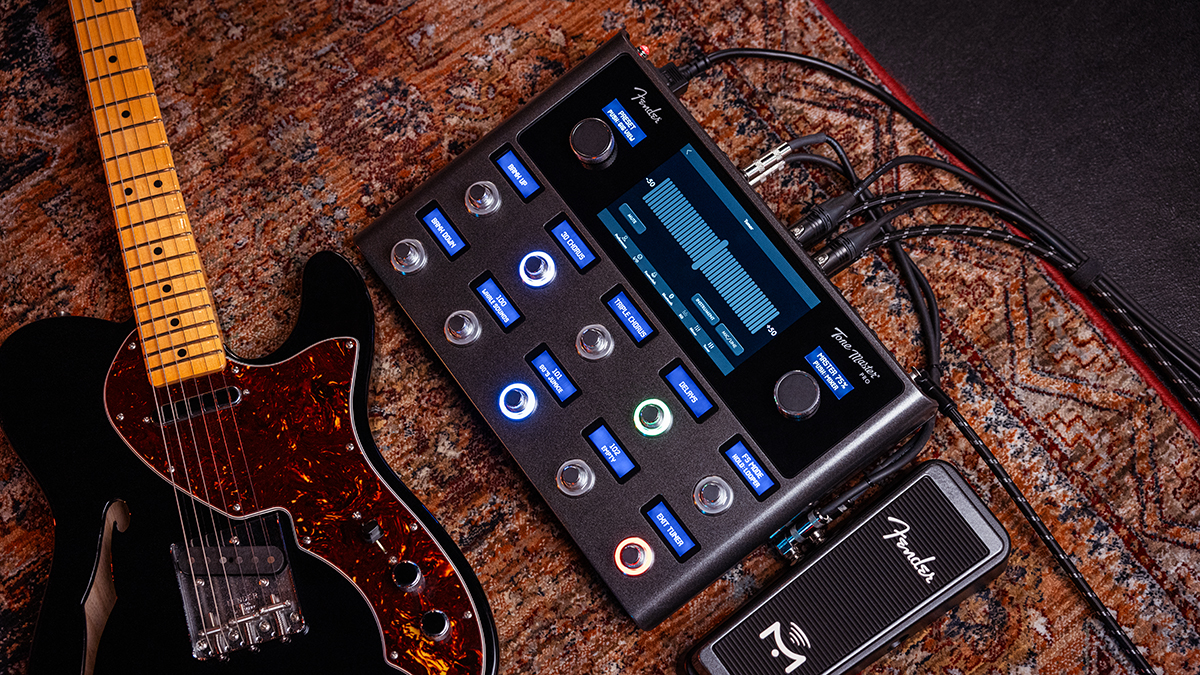
Fender confirms NAM A2 captures are coming to Tone Master Pro
The planned update will place captures in the normal signal chain with touchscreen, app and custom-graphic support, although Fender has not set a date.

Fractal’s firmware 33 puts NAM A2 and TONE3000 inside the Axe-Fx III
The free update adds two NAM Player blocks, in-editor capture browsing, modeled tone stacks and storage for up to 256 captures.

EarthQuaker Devices gives Plumes Jr and Blumes Jr a limited MOSFET makeover
The compact overdrives trade their familiar asymmetrical silicon voice for a more open MOSFET mode, with only 3,000 pedals planned between the two models.

Underdog CHUCK firmware 1.6.0 expands seven presets into seven banks
The matching STUDIO update adds bank and matrix views, steeper IR-loader filter slopes and safer preset management to the analog-tube floorboard amp.
This story started with a tip sent to us through the Guitar Radar news form. Have news from your band, brand or company? Send it through the form.